Midjourney prompts
Midjourney Food & Restaurant Prompt Cases: 12 Menu, Plating & Atmosphere Templates (V8.1)
Midjourney.ing10 min read
Contents+
Using Midjourney for food photography / restaurant menu images most often fails when props bury the dish, steam and light effects steal the show, or “cinematic” styling makes the result look nothing like a menu-ready plate photo. This article gives you 12 ready-to-adapt templates built for Midjourney V8.1, covering menu hero shots, plating close-ups, drinks and desserts, restaurant atmosphere images, and delivery / tabletop scenes, with notes on when to enable --raw and how to go SD→Run as HD for delivery.
If you are still building your prompt skeleton, start with Midjourney Prompt Tips: A Structure Built for V8.1; for a general scene library, see Midjourney Prompt Case Library: 10 Ready-to-Adapt V8.1 Scene Templates (which includes a ramen case—this article breaks food work into a dedicated, swappable topic); for the realism switch, pair it with Midjourney –raw Realism Tutorial: Product Still Life & Architecture Step by Step.
Three Rules for Food & Restaurant Output
- Food first, props and atmosphere second
Name the dish, container, and key toppings before adding tabletop and light.appetizing food photographyhelps, but do not replace “what you see” with a string of empty adjectives. - Menu hero shots lean realistic; brand atmosphere images can keep style
Menu listings, delivery covers, and detail-page heroes: try--rawfirst; brand stories and social atmosphere shots can skip Raw initially, then A/B. - Explore in SD, deliver in HD; change only one dish or one light at a time
V8.1 natively supports about 2K. Keep test runs in SD; lock the winner with Run as HD. See Midjourney HD vs SD: Save Time and Cost with a Resolution Strategy.
The prompts below are English templates. You can write in Chinese too; the key is still “dish subject → framing / shot size → light → ware material → light style → parameters”.
Case 1: Overhead Menu Hero (Ramen / Noodle Soup)
Best for: Menu hero, delivery cover, detail-page main image
Suggested parameters: --raw; --stylize 50–80; keep chaos low
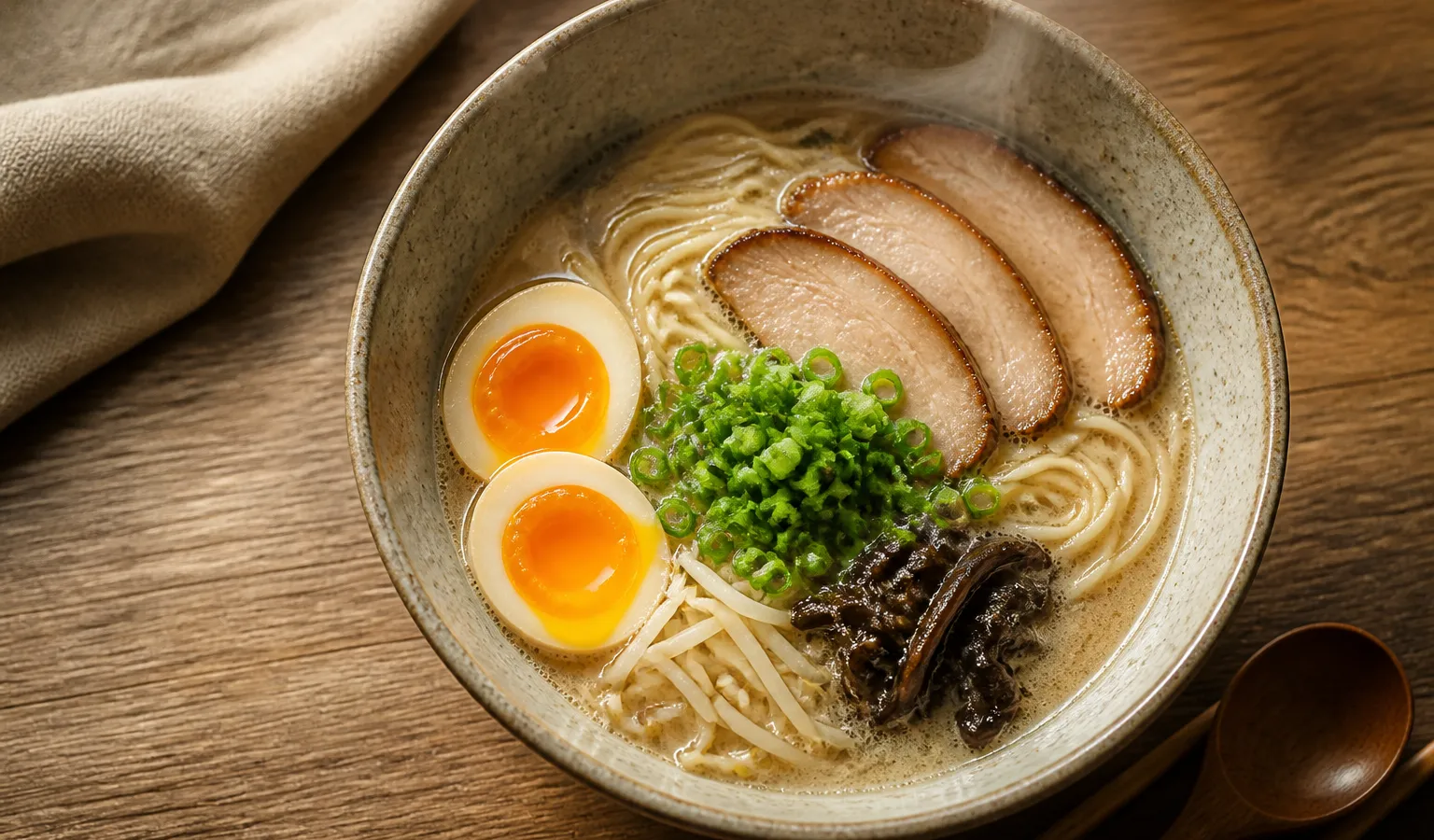
overhead shot of handmade ramen bowl with soft egg and scallions, steam rising, warm kitchen side light, ceramic bowl texture, appetizing food photography --raw --stylize 70How to adapt: Swap broth and toppings (tonkotsu / spicy miso); framing can become 45-degree tabletop; if steam is too heavy, delete steam rising or write subtle steam.
Case 2: 45° Plating Close-Up (Steak / Main Course)
Best for: Western mains, plating showcase, refined menu pages
Suggested parameters: --raw; write shallow DOF clearly; finalize in HD
45-degree plated steak dinner with roasted vegetables and herb butter, medium food shot, soft restaurant side light, crisp sear texture, ceramic plate, commercial menu food photography --raw --stylize 65How to adapt: Swap the main (fish / chicken); change sauce and sides one category at a time; avoid stacking conflicting vibes like “Michelin” and “street food” in the same prompt.
Case 3: Sushi / Sashimi Platter (Clean Negative Space)
Best for: Japanese menu, platter hero image
Suggested parameters: --raw; negative-space friendly for later price-tag overlays
assorted sushi platter on dark slate, overhead menu shot, soft diffused daylight, fresh fish texture readable, clean negative space, Japanese restaurant food photography --raw --stylize 60How to adapt: Swap platter combinations; background can become light wood board; for series consistency, fix ware and color temperature + SREF (see Midjourney Style Reference Complete Guide: How SREF and Moodboards Keep Series Visuals Cohesive).
Case 4: Burger / Fast-Food Hero Shot
Best for: Fast-food hero, launch poster, social cover
Suggested parameters: Stylize can go slightly higher; menu-realism still benefits from --raw
stacked smash burger with melted cheese and sesame bun, hero three-quarter food shot, soft studio key light, glistening patty texture, simple kraft paper backdrop, commercial burger photography --raw --stylize 75How to adapt: Swap topping layers; background can become black seamless; if cheese pull is weak, add cheese pull alone—do not rewrite the whole sentence at once.
Case 5: Coffee / Pour-Over Drink Close-Up
Best for: Café menu, new drink launch, brand content
Suggested parameters: Medium stylize; keep cup surface and steam restrained
latte art tulip in a ceramic cup on wooden cafe table, close-up drink shot, soft morning window light, fine foam texture, shallow depth of field, cafe beverage photography --stylize 90How to adapt: Swap latte art pattern or drink type (iced Americano / matcha); for more “shelf-ready” feel, add --raw; tabletop props should not steal the cup.
Case 6: Dessert Slice / Cake Close-Up
Best for: Dessert menu, afternoon tea, seasonal launch
Suggested parameters: --raw improves material readability; watch cross-section texture
slice of berry cheesecake on a small plate, 45-degree dessert shot, soft daylight, creamy layers visible, fresh berries on top, bakery dessert photography --raw --stylize 70How to adapt: Swap cake type (chocolate / tiramisu); add powdered sugar or sauce one at a time—avoid muddying the frame.
Case 7: Chinese Hot Dish Family-Style (Round-Table Atmosphere)
Best for: Chinese restaurant menu, shared-dish hero, holiday set menu
Suggested parameters: Main dish must stay clear; people can be softened or omitted
Chinese family-style stir-fry dish in a ceramic serving bowl at a round dining table, medium tabletop shot, warm banquet lighting, glossy sauce texture, appetizing Chinese food photography --raw --stylize 75How to adapt: Swap cuisine and ware; for a homier feel, write home-style plating; avoid writing luxury banquet when the dish itself is unreadable.
Case 8: Whole Pizza Overhead
Best for: Pizzeria menu, delivery cover
Suggested parameters: --raw; describe cheese and edge char specifically
whole Neapolitan pizza on a wooden peel, overhead food shot, soft oven-side warm light, blistered crust and melted mozzarella, rustic pizzeria food photography --raw --stylize 70How to adapt: Swap toppings (seafood / vegetarian); for sliced presentation, open a separate sliced pizza close-up—do not cram whole pie and slices into one sentence.
Case 9: Bar / Cocktail Atmosphere Shot
Best for: Drink-list mood page, nightlife F&B visuals, brand story
Suggested parameters: Raw optional at first; write light sources clearly—avoid neon drowning the glass
craft cocktail with citrus garnish on a dark bar top, medium drink shot, soft rim light and low ambient, condensation on glass, moody bar beverage photography --stylize 110How to adapt: Swap drink and glass shape; background can become marble bar; for menu-realism pages, add --raw and compare again.
Case 10: Restaurant Interior Dining Atmosphere (Space Serving Dishes)
Best for: Restaurant about page, reservation-page atmosphere, brand visuals
Suggested parameters: Write person-vs-dish priority clearly; use Moodboards for series
intimate restaurant dining table with plated seasonal dishes, medium interior lifestyle shot, warm pendant lighting, soft bokeh background, hospitality food atmosphere photography --stylize 100How to adapt: Swap restaurant style (sushi counter / open kitchen); if dishes are unclear, write dishes in sharp focus; for more realistic space, try --raw.
Case 11: Takeout Unboxing / Home Tabletop Scene
Best for: Delivery detail pages, unboxing content, home dining shots
Suggested parameters: Product stays the hero; packaging and tabletop should not get too messy
takeout meal opened on a home desk with chopsticks and drink cup, lifestyle tabletop scene, soft afternoon window light, appetizing food still hero, casual delivery food photography --stylize 95How to adapt: Swap meal type; for a more e-commerce hero feel, stack image reference to lock packaging shape (see Midjourney Image-to-Image & Image Reference: From One Reference Image to Controlled Delivery).
Case 12: Same Restaurant Three-Image Set (Main + Drink + Interior)
Best for: Opening materials, menu refresh, brand launch triptych
Suggested parameters: Shared color temperature and ware language; mood via SREF; shape via reference images
same restaurant set: (1) overhead ramen bowl menu shot, (2) latte close-up on wood table, (3) warm dining interior with plated dishes, consistent ceramic ware and warm light, commercial restaurant photography series --stylize 90How to adapt: In practice, split into three generations (one image each) is more reliable—keep ware and color-temperature words fixed, change only dish and framing. Iteration: Midjourney Vary & Remix: Small-Step Iteration to Final Delivery.
Menu Hero / Plating / Atmosphere: Which Template to Pick
| Goal | Prefer | Template bias | Parameter bias |
|---|---|---|---|
| Menu hero, delivery cover | Overhead / hero angle, clear subject | Cases 1–4, 8 | --raw + low–medium stylize |
| Plating & dessert close-ups | 45° or close-up, readable materials | Cases 2, 5–6 | --raw; control props |
| Drink list / brand atmosphere | Light, shadow, and mood | Cases 9–10 | Stylize can go slightly higher; Raw as needed |
| Home / delivery scenes | Lifestyle feel but dish stays hero | Case 11 | Medium stylize |
| Opening triptych | Same ware, different framing | Case 12 | SREF + three separate generations |
Turn Food Templates into a Deliverable Workflow
| Step | What to do | Purpose |
|---|---|---|
| 1 | Pick menu hero / plating / atmosphere template | Reduce stacking “delicious and appetizing” empty words |
| 2 | Replace only dish name and ware | Quick direction check |
| 3 | Generate candidates in SD; change light or toppings one at a time | Lock composition |
| 4 | Enable --raw for menu heroes; A/B atmosphere shots |
Control realism |
| 5 | Packaging / signature shape unstable → add image reference | Lock brand recognition |
| 6 | Series menu: attach SREF / Moodboards | Multi-image consistency |
| 7 | Vary Subtle for char marks, steam, and edges | Small-step refinement |
| 8 | Run as HD for ~2K delivery | Publish-ready output |
End-to-end flow: Midjourney AI Art from Start to Finish: The Complete 2026 Workflow (V8.1); series consistency: Series Visuals with Style Reference: Brand Consistency in Midjourney.
Why Food Prompts Break When You Edit Them
- Only “delicious,” no dish name or framing → subject unclear, does not read as menu image
- Props, flowers, and smoke fill the frame → food becomes a supporting element
- Starting in HD for trial and error → expensive and slow (V8.1: use SD→HD)
- Copying V7’s
--q→ V8.1 / V8.2 do not support--q - Atmosphere shots with neon too strong → glass and dish colors go wrong
- Rewriting ware and color temperature on every menu image → does not read as a set (fix ware words + style anchor)
Full parameter table: Midjourney V8.1 Parameter Cheatsheet: –hd –raw –chaos –stylize; beginner pitfalls: 10 Common Midjourney Beginner Mistakes (and How to Fix Them).
How This Fits With Other Site Content
- Structure method: Midjourney Prompt Tips: A Structure Built for V8.1
- General 10-scene library: Midjourney Prompt Case Library: 10 Ready-to-Adapt V8.1 Scene Templates
- E-commerce product focus: Midjourney E-Commerce Prompt Cases: 12 Product Hero & Lifestyle Scene Templates (V8.1)
- Portrait focus: Midjourney Portrait Prompt Cases: 12 ID-Style, Fashion Editorial & Character Lookbook Templates (V8.1)
- Architecture & interior focus: Midjourney Architecture & Interior Prompt Cases: 12 Scheme Drawings, Moodboards & Night View Templates (V8.1)
- Lock shape with reference images: Midjourney Image Reference in Practice: Controlled Variants from Reference Images
Once you have dish names and ware keywords ready, enter the workspace from “Try Midjourney now” at the top: run Case 1 for an overhead menu shot, add Case 5 or 10 for drinks / interior atmosphere, then Run as HD—faster to menu-ready delivery than debating a “complete food prompt encyclopedia.”
Closing
Midjourney food and restaurant prompts succeed when “looks delicious” becomes dish subject, plating angle, and use case. Use these 12 V8.1 templates to separate menu heroes, plating close-ups, and restaurant atmosphere images, then add --raw, image reference, and style anchors so your menu images / food photography / restaurant visuals stay near deliverable instead of random food posters. Start by swapping the first dish name in whichever template matches your current listing need.